Cox Communications · 2008 to 2015
Designing the Cox Contour remote
An award-winning remote built on one idea: it should feel simple and familiar from the first touch.
- Company
- Cox Communications
- My role
- UX and interaction design
- Scope
- With industrial design and engineering
- Years
- 2008 to 2015
- Reading time
- 2 minutes
The remote is where the TV experience is won or lost. It is touched more than any screen in the home, and by the late 2000s cable remotes had become cluttered and unintuitive: dozens of buttons, no hierarchy, and little thought for how people actually hold them.
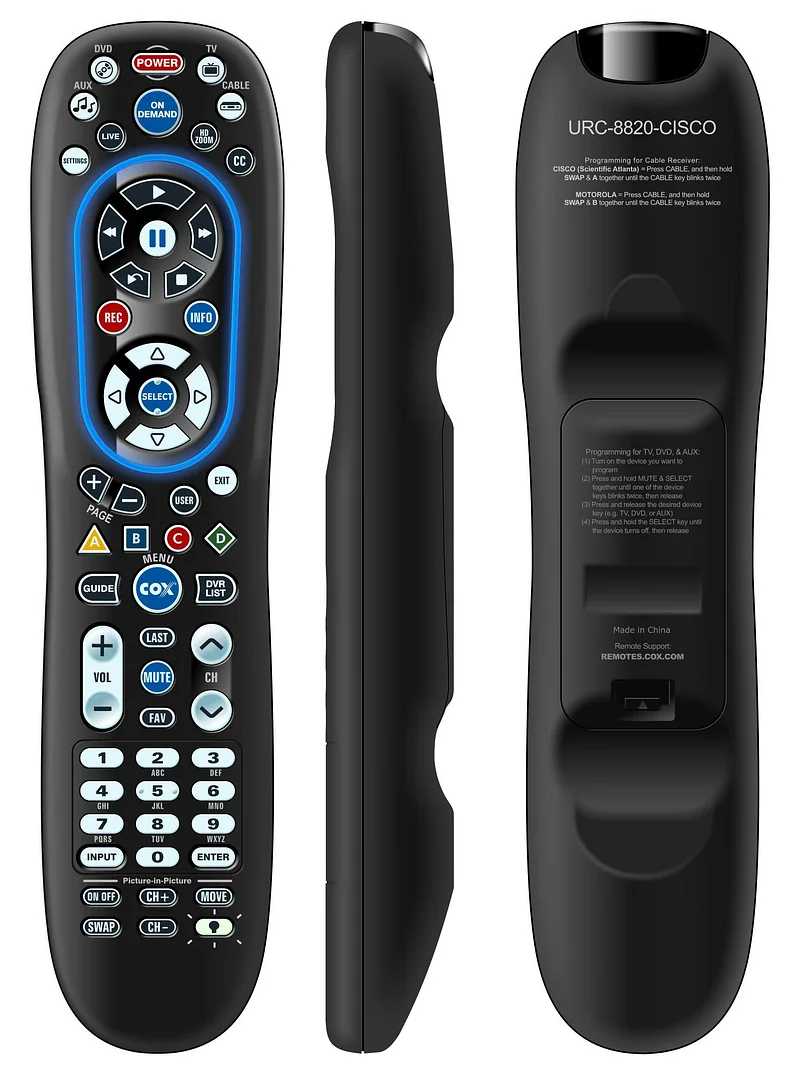
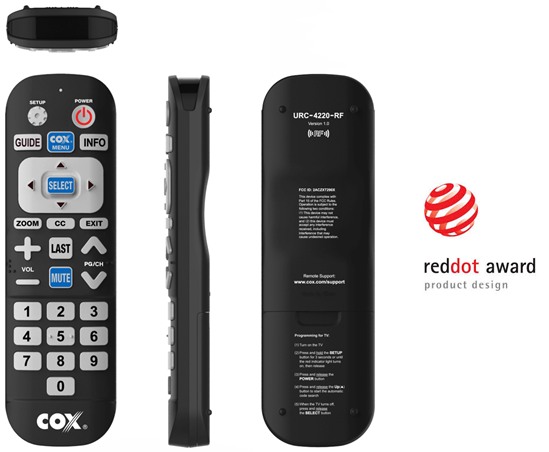
I designed a remote for Cox that made everyday TV interactions simpler. It launched alongside the Contour guide in 2010 and won a Red Dot International Design Award.
The brief
Design a remote that:
- Feels simple and friendly at first touch
- Supports comfortable one-handed use
- Keeps core actions within thumb's reach
- Builds on habits instead of forcing people to relearn
- Visually complements the Contour guide
What the research showed
In 2007 we ran qualitative and usability research in the New England market. Customers described their ideal remote in a clear order: simple, innovative, friendly, and good in the hand.
Five findings shaped everything:
- The size of the remote strongly influenced how simple it felt
- People wanted one-handed use, with the most-used functions within thumb's reach from the center
- Number keys belonged at the bottom, and record, play, and pause needed to be large and unmistakable
- People did not want to relearn how to use a remote, so the design had to build on what they already knew
- Buttons were only seen as related when they formed a distinctive pattern
What I did
I turned the research into three principles: simplicity, reach, and familiarity. Working with industrial design and engineering, I iterated through multiple form factors and button layouts.
We tested final prototypes with customers on ergonomics, hand feel, button shape and placement, tactile feedback, visual appeal, and how easy the remote was to program. Each round of feedback went straight back into layout, spacing, and feedback design.
What changed
The Contour remote launched in 2010 with a layout that matched the on-screen guide and made core tasks like channel selection and DVR playback easier. It earned a Red Dot International Design Award.
What I'd do differently
I would push harder for the personalization customers asked for: custom color, materials, and lighting. We explored it, and the safer option won. Looking back, those small details were the ones most likely to make the remote feel like the customer's own.