The Coca-Cola Company · 2025 to 2026
myCoke: four portals, one platform
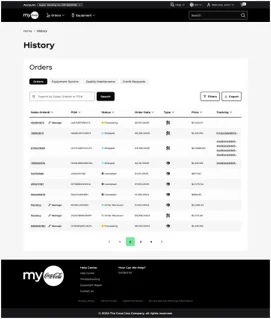
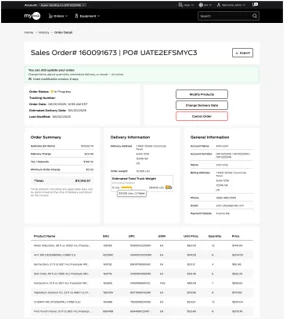
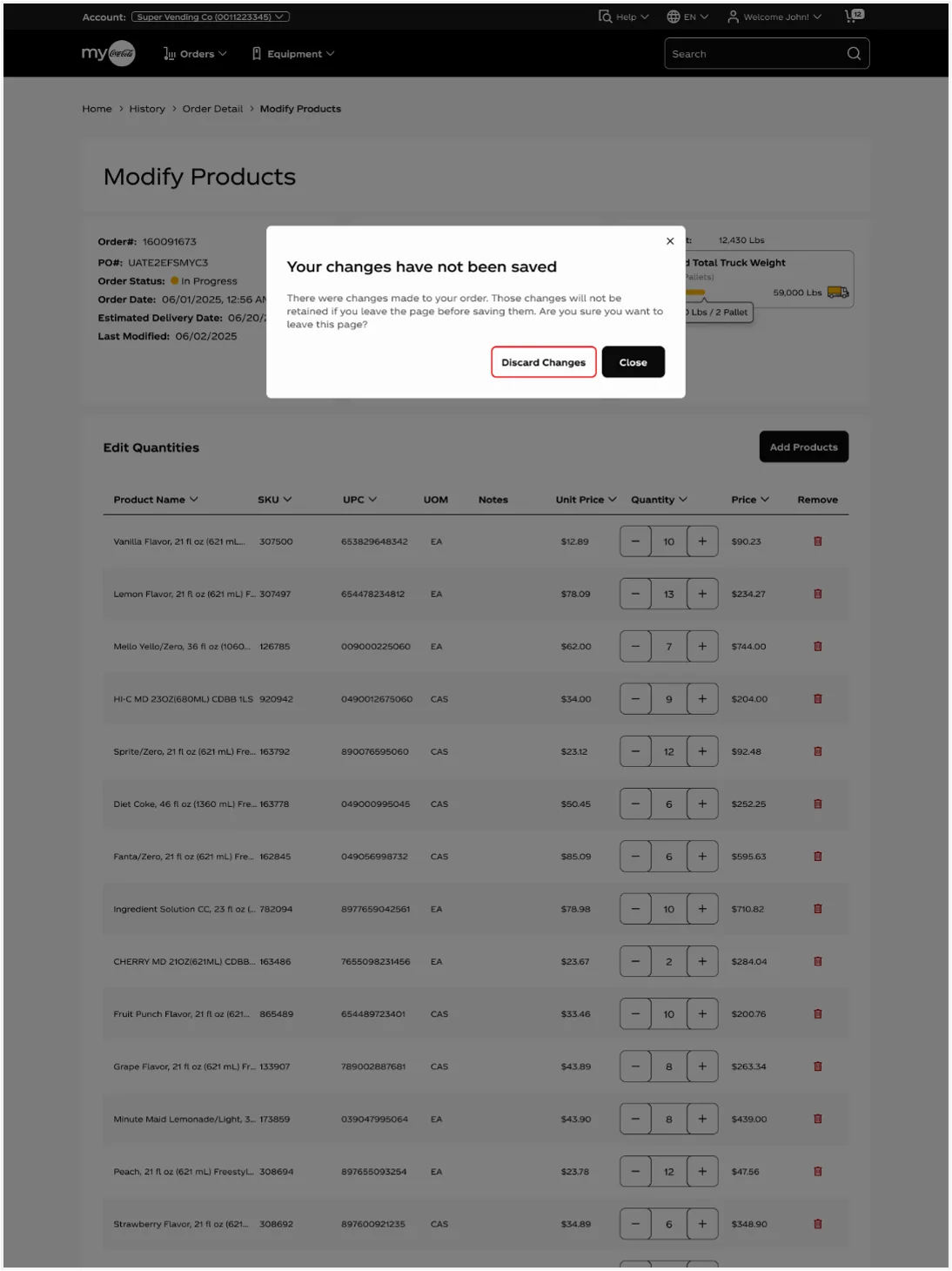
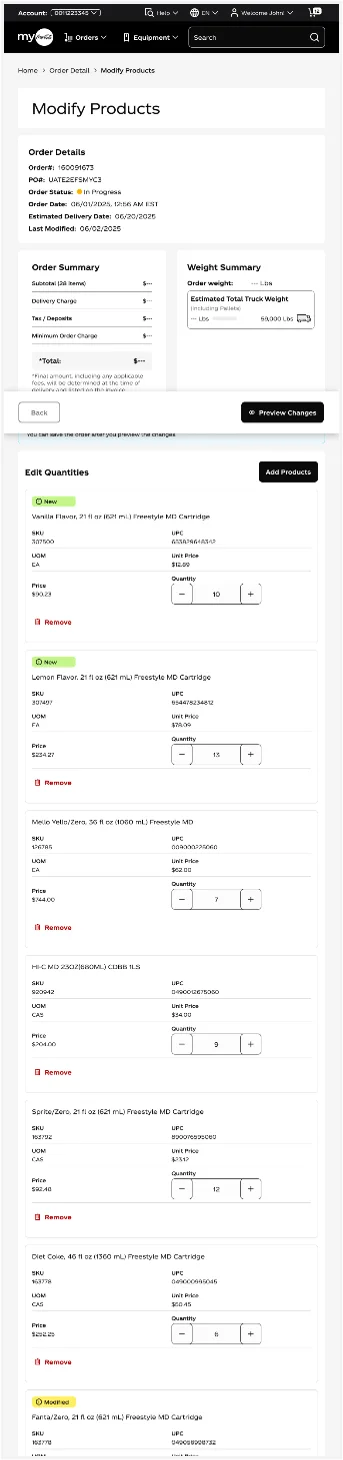
I led UX to consolidate four legacy portals into one platform for ordering, service, and quality maintenance. It eliminated more than 40,000 manual support requests a year.
- Company
- The Coca-Cola Company
- My role
- Director, B2B Product Design
- Scope
- Led end-to-end product design
- Years
- 2025 to 2026
- Reading time
- 2 minutes
The situation
myCoke serves retailers, bottlers, food-service operators, and field technicians. When I joined, ordering, service, and invoicing lived in four separate portals, and much of the real work still ran through email and phone. Adoption was low, we had little customer insight, and every change to a complex workflow took too long.
The platform needed one UX vision, a repeatable way of working, and faster cycles from idea to validation. I led the team and stayed hands-on for the hardest structural work.
Three moves
1. Agree on the problem before drawing screens
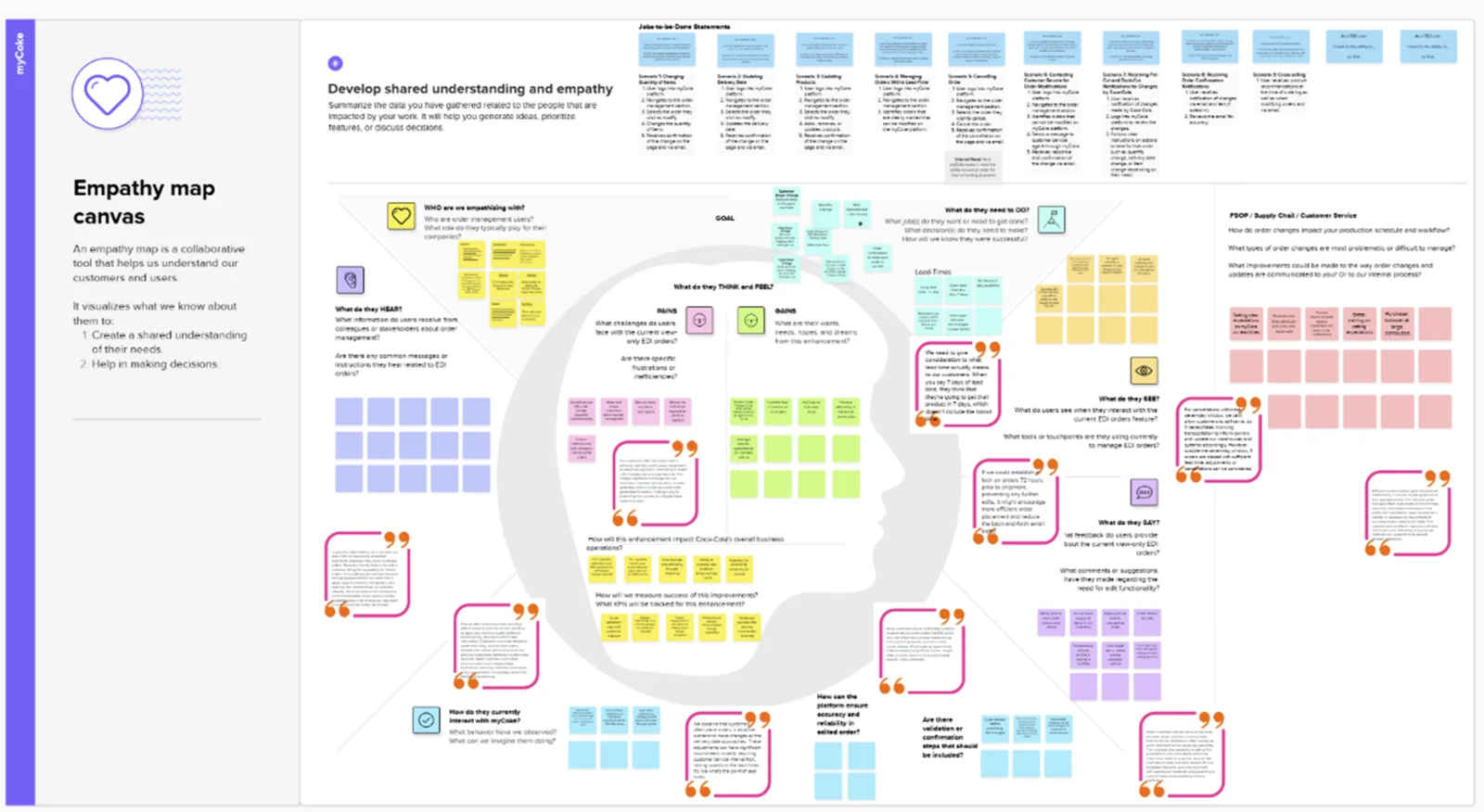
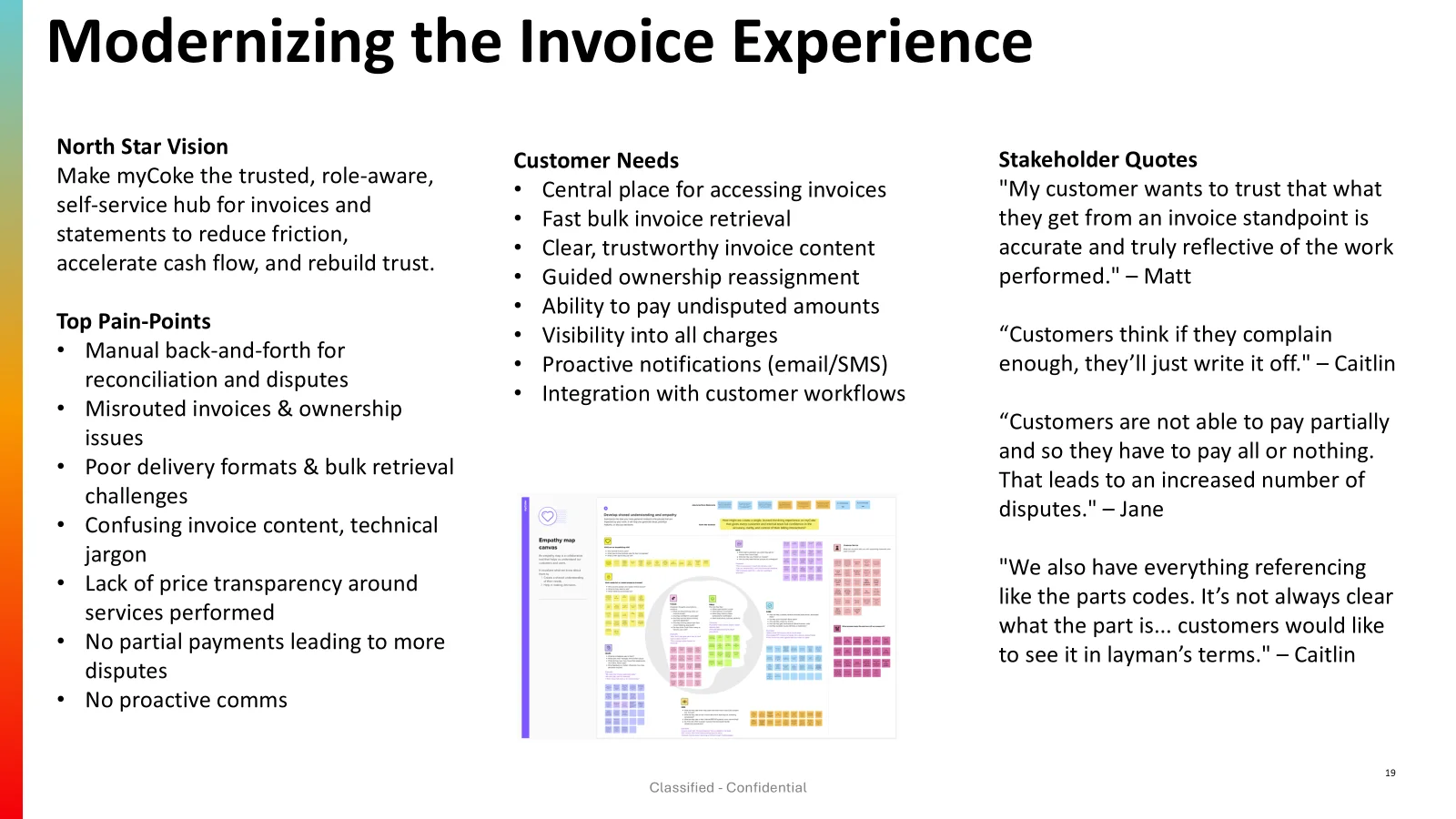
I ran discovery workshops with 20+ stakeholders from Product, Engineering, Service Ops, Finance, and CX, covering orders, invoices, and reimbursements. We framed the problems with empathy maps and Jobs-To-Be-Done, then ranked opportunities by importance and difficulty with Product and Technology leadership. A vague problem space became a prioritized list tied to customer need.
2. Take on the hardest journey myself
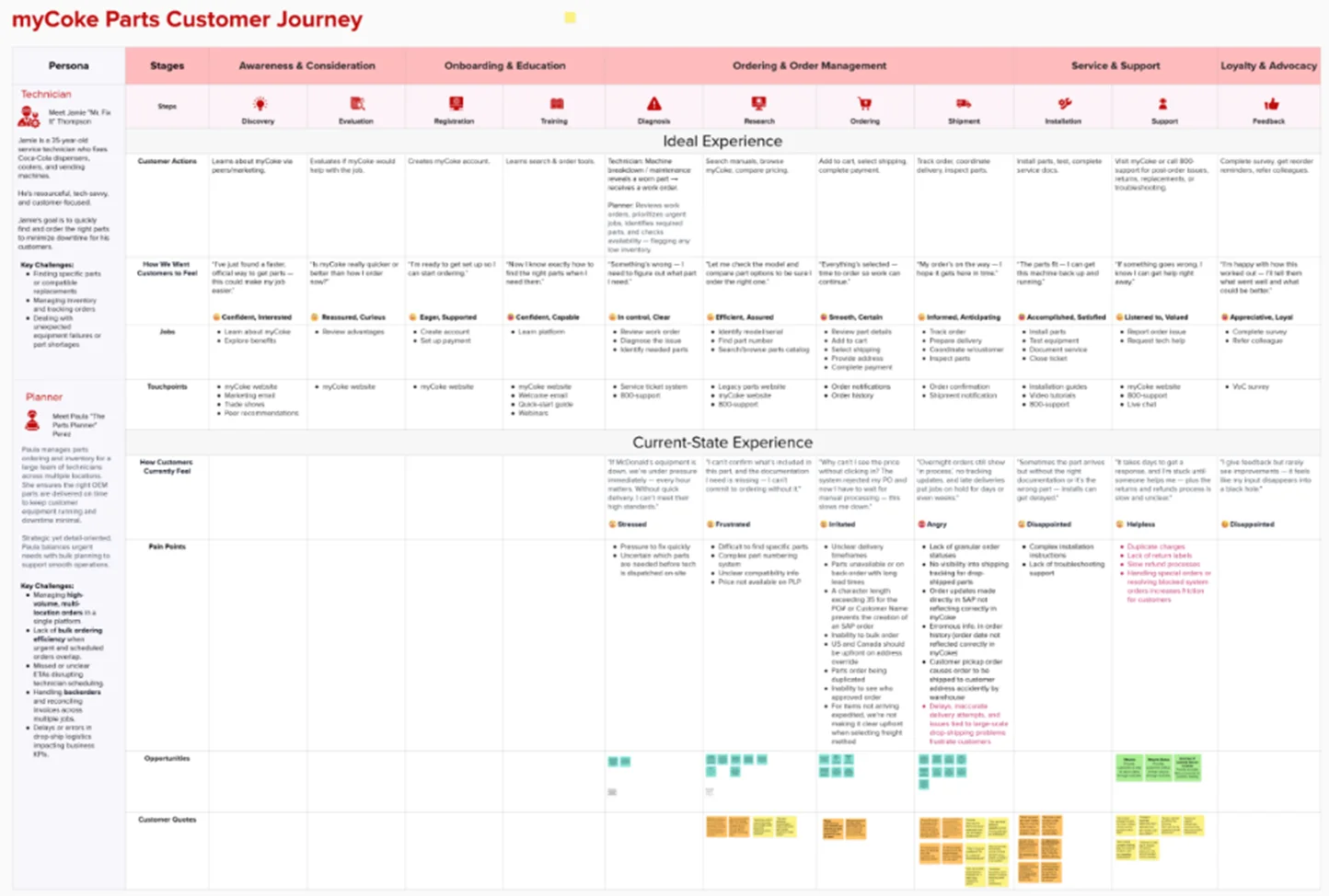
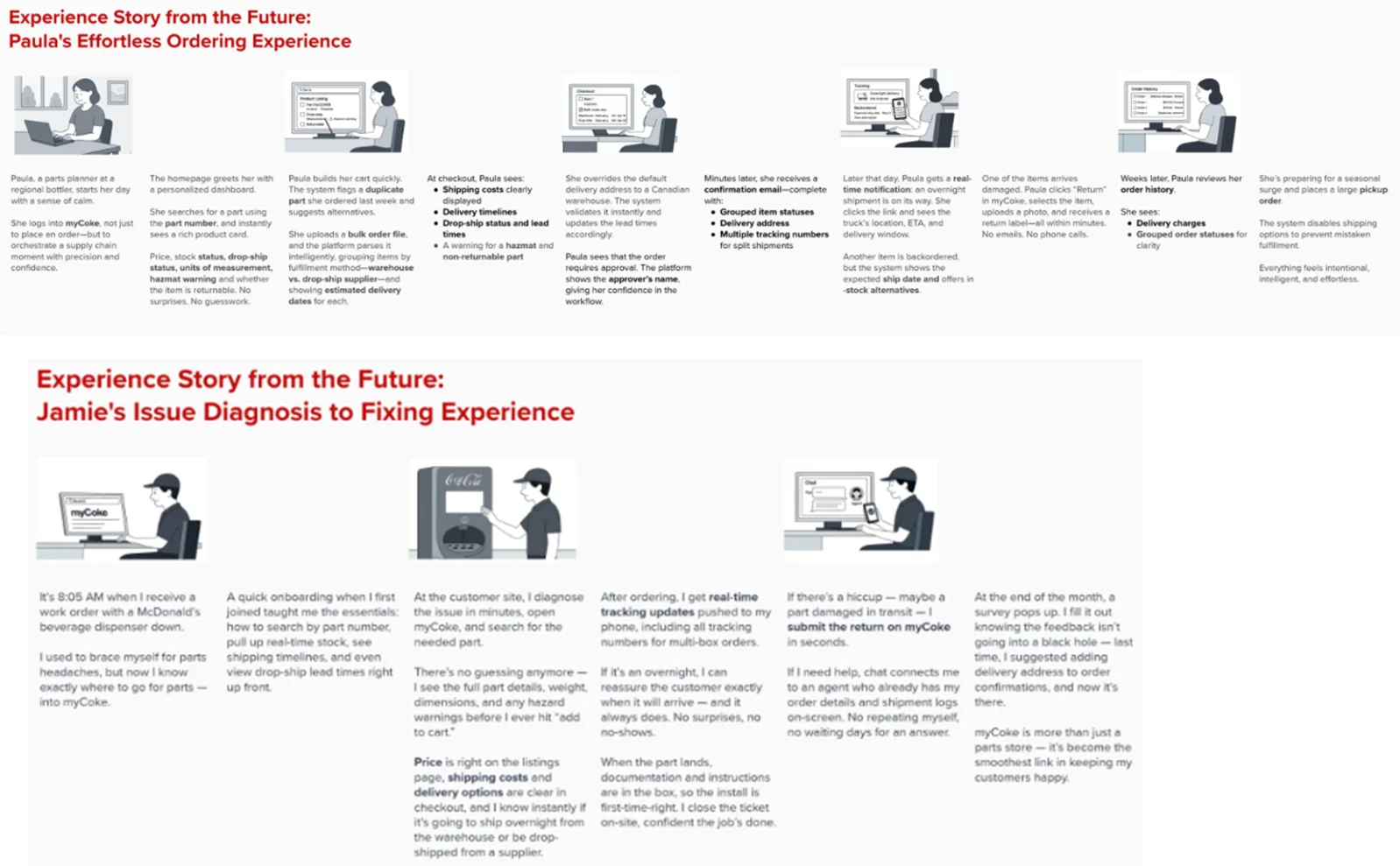
Parts was the most tangled journey. It spans independent service providers and field technicians, from spotting a problem to finding a compatible part, ordering it, and getting service afterward. I mapped it end to end and drew the early wireframes and concept prototypes myself, so stakeholders could react to a picture of the future instead of a description of it. The team then took it to mid and high fidelity.
3. Shorten the path from idea to testable
I brought AI prototyping into the team's workflow, using Figma Make, Lovable, Claude, Stitch, and Nano Banana Pro. Early concepting dropped from two to three weeks to two to five days, and stakeholders could react to something working instead of a static mock. I paired that with one operating model for every team (discovery, design, testing), which cut churn and sped up delivery.
Results
- 40,000+ manual support requests a year eliminated
- Four portals retired and replaced by one platform covering ordering and tracking, service requests, quality maintenance, and self-service help, built on Salesforce Lightning
- 80% of service cases routed directly to a technician at case creation
- Credit submissions 43% faster than through assisted channels
- Quality-maintenance completion up 7 points over the legacy process
- Design System v2 in place across the platform
What I'd do differently
I would have had a researcher on the team from day one. Mine started around month six. The Voice of the Customer program I was building had real momentum by then, but earlier research capacity would have let us put more items in front of customers before development started. Next time I plan research capacity into the team from the beginning.
Selected screens